Estudiante/s
Alex Bretaudeau - Liam Farrell - JiménezBerta Lloveras Borràs - Cristina Marcello Melián - Pau Padrós
Promoción
2024
Basic info
PARA QUÉ SIRVE
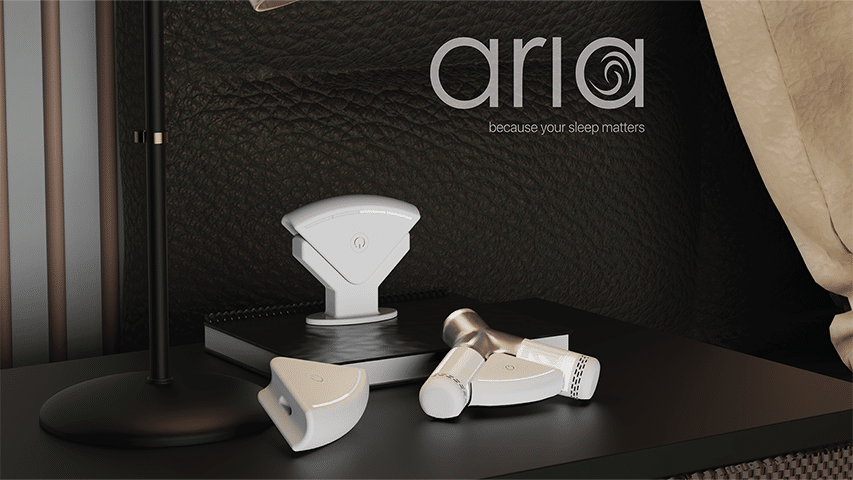
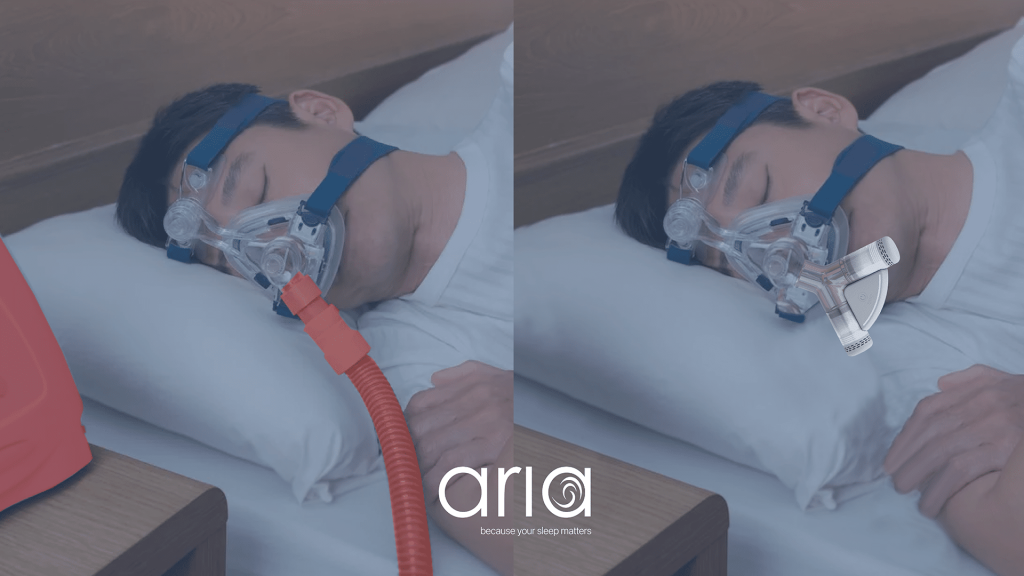
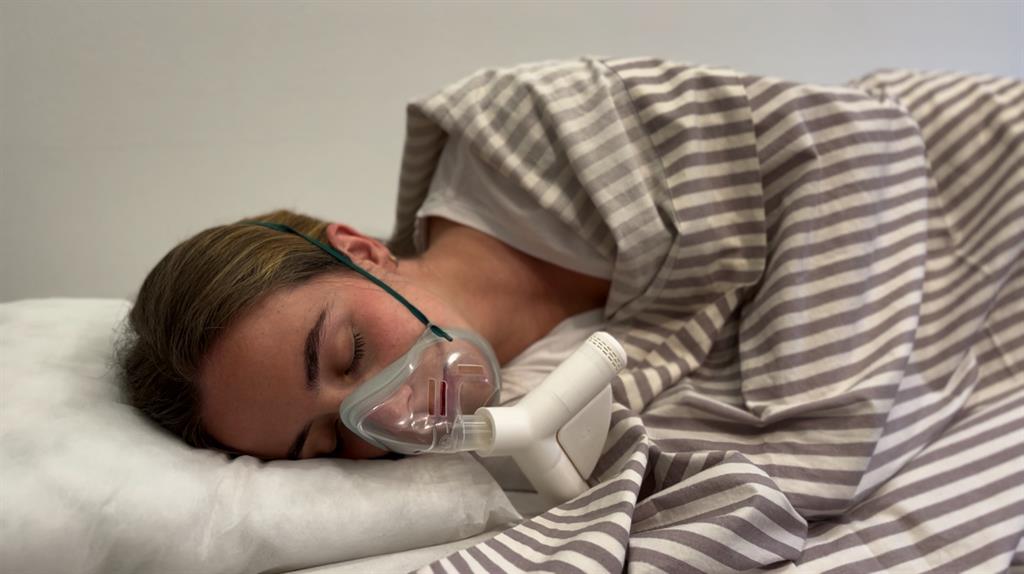
Aria integrates all the systems of a CPAP machine for treating sleep apnea into the mask itself. This eliminates the tubing connecting the mask and all external machinery, giving the patient complete freedom.
QUÉ TE INSPIRÓ
Aria emerged from internal discussions within the team and with professionals at the Hospital Clínic de Barcelona. Sleep apnea is a disorder that affects approximately 22% of men and 17% of women, and it particularly affects older adults. Furthermore, 80% of cases are never diagnosed, and of those that are, 50% abandon treatment. The current system uses a machine on the bedside table, connected to the mask by a tube. Sleep apnea is a very common disorder, with unsatisfactory treatment and a high dropout rate. Aria aims to reduce this rate by giving patients freedom.
CÓMO FUNCIONA
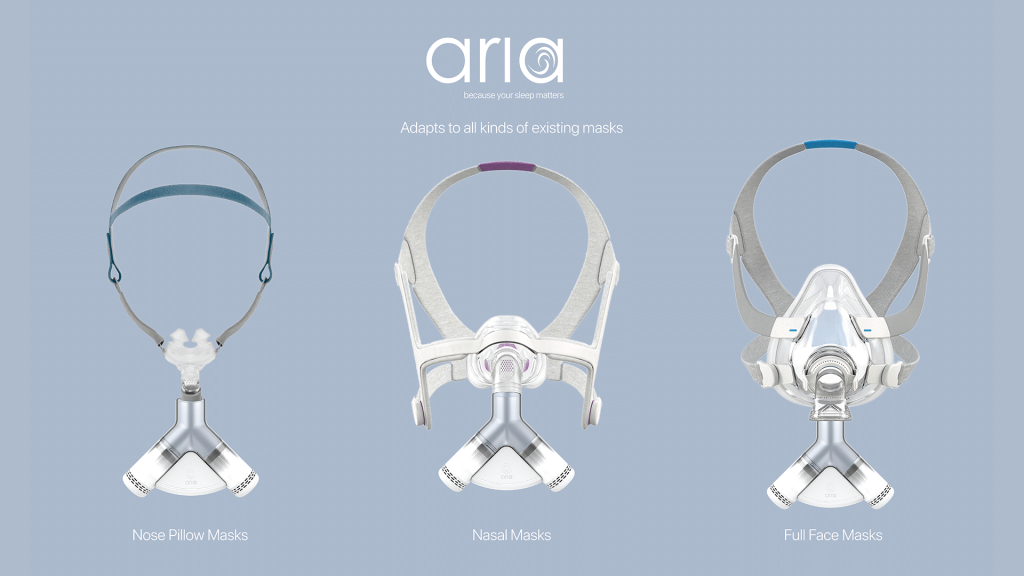
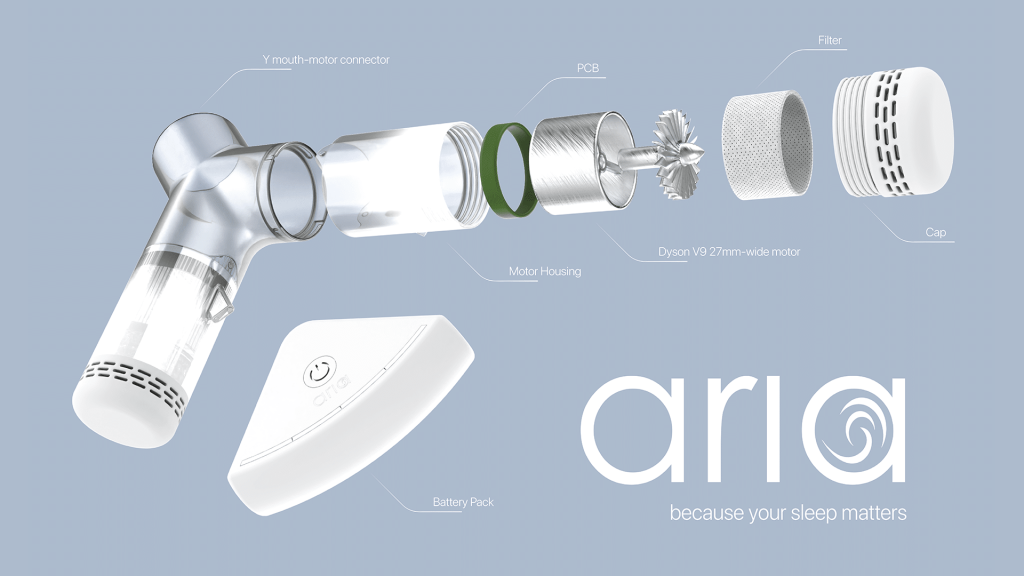
Aria combines the entire CPAP system into a single device that attaches to the mask. It works with two Y-shaped Dyson V9 motors positioned downward as far as possible from the ears. These motors operate at 40% power for quieter performance. If the patient turns over and one motor becomes obstructed, the other compensates. A removable central battery powers the motors, including LEDs to display the charge. Magnetic pins that connect the battery to the motors also function as chargers in a charging cradle. The plug-and-play nature of the batteries allows patients to travel with Aria, carrying multiple batteries, something unimaginable with current CPAPs. Designed for easy disassembly, Aria facilitates cleaning and repair. The most common maintenance is filter replacement, which is done by unscrewing a cap. Furthermore, Aria is compatible with all existing masks (nasal, nasal, and oronasal cannulas).
PROCESO DE DISEÑO
The Aria design process was carried out in four parts. After deciding to address this problem, the condition and the current situation were thoroughly studied. CPAP experts and users were interviewed. Current CPAPs were tested to understand the pain points and establish a series of goals for the design. This step was key to understanding that we needed two motors. Next, a mockup of the maximum volume it could have was made, and the placement of the different elements began. The Y-shape of the motors came naturally, but placing the battery was a bit more difficult. External options, with cuffs, were developed but discarded in favor of a battery straddling the two motor tubes. This also allowed the two motors to be powered from a central element and made it easier to put on and take off the mask. Once the design was finalized, it was printed, and weights were added to simulate the real motors. It was also tested by having non-CPAP users sleep one day with a regular CPAP, and the next day with ours, or vice versa. All ten testers agreed that Aria improves the user experience. The added weight on the face isn't a problem, as the head is supported at all times.
QUÉ LO HACE DIFERENTE
Aria is completely different from other CPAP machines currently available. All current systems consist of bulky boxes that sit on the bedside table, connected to the patient via tubing and a mask. This limits sleep freedom; the patient is forced to sleep on their back or side and cannot turn or move around in bed. By removing the tubing, Aria gives the patient complete freedom, improving the user experience. Being a battery-operated design, it is also more resistant to power outages and is better suited to developing countries. Multiple battery packs allow patients to use their CPAP for multi-day activities in the wilderness, such as camping, or in locations without power connections. Aria is also lighter and smaller than existing designs, helping users lead as normal a life as possible.
PLANES PARA EL FUTURO
Once the ergonomics of the solution have been tested with the first prototype, we want to verify the functionality of the proposal with a working prototype. It is also essential to conduct exhaustive tests of the motors in their final locations and speeds to maximize their quietness and improve sleep quality. Once this is completed, the necessary processes to bring the product to market will begin.
Tutores
Salvador Fàbregas
Núria Ruiz
Gislé Segura
Estudio
Máster en diseño y desarrollo de producto